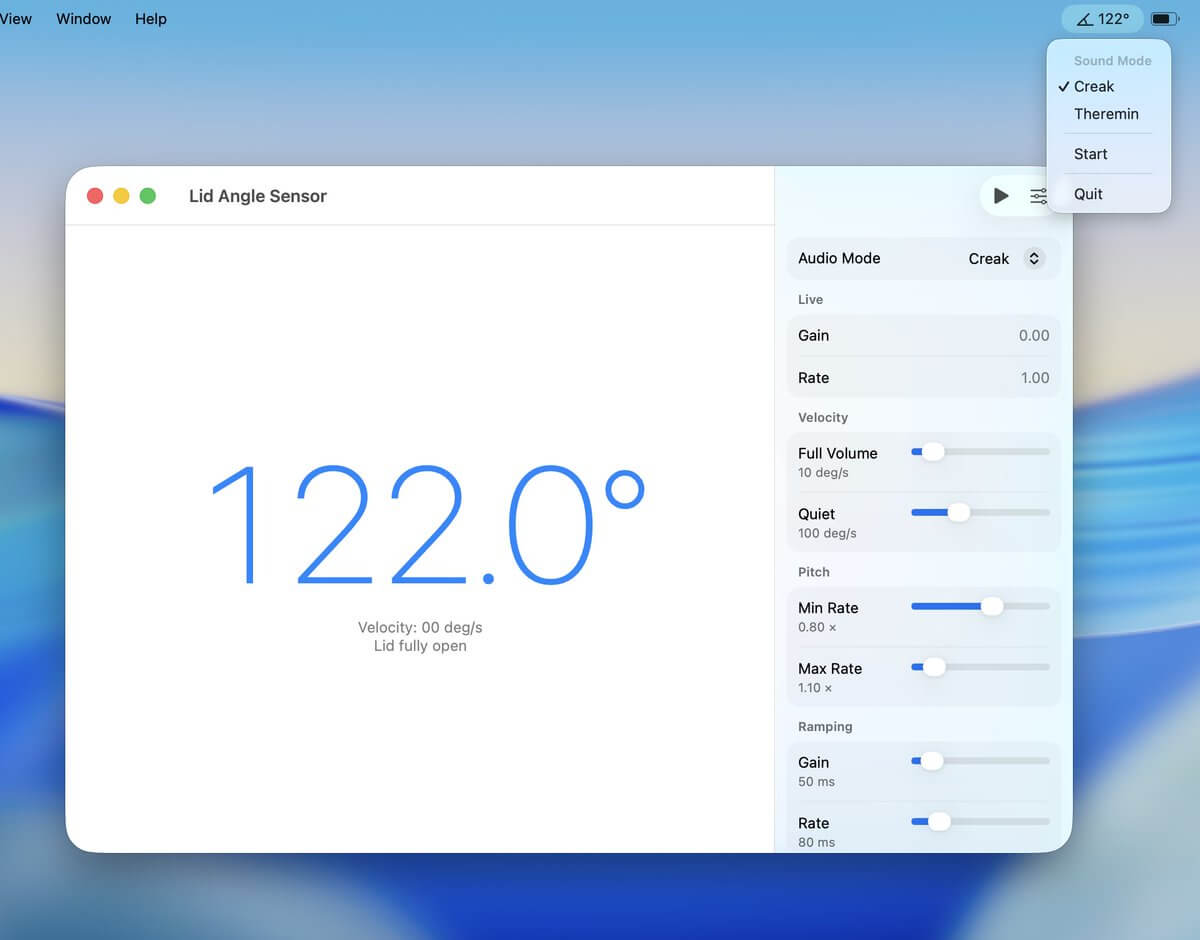
LidAngleSensor is a macOS utility application that displays the real-time angle measurement from the lid angle sensor built into modern MacBooks. The project was created by Sam Gold and serves as both a functional tool and a humorous exploration of lesser-known hardware features.
Core Functionality
The application reads data from the lid angle sensor present in MacBooks and displays the current angle of the laptop's lid. As an optional feature, the utility can play a wooden door creaking sound effect when the lid is adjusted slowly, adding a playful element to the otherwise technical functionality.
Device Compatibility
The lid angle sensor was first introduced with the 2019 16-inch MacBook Pro. Generally, MacBooks newer than this model should have the sensor. However, there are known compatibility issues with certain models:
- M1 MacBook Air (wedge-shaped model)
- M1/M2 MacBook Pro with Touch Bar
Users have reported that the application does not work on M1/M2 devices, though the developer has not yet identified a fix for these models.
Interestingly, the sensor also works on iMac computers, despite them not having a traditional lid.
Technical Implementation
The application is built using Swift and requires Xcode for compilation. The developer has tested it on Xcode 26, though compatibility with other versions may vary. The project is hard-coded to look for a specific sensor, which may explain some of the compatibility issues with certain Mac models.
Installation
LidAngleSensor can be installed via Homebrew using the command:
brew install lidanglesensor
Project Background
The developer created this utility partly out of curiosity about the lid angle sensor's existence and purpose. The project includes humorous FAQ entries addressing questions about why MacBooks need to know the exact angle of their lids (to which the developer admits not knowing the answer) and acknowledging limitations in the audio implementation.
The sound effect used in the application comes from LEGO Batman 3: Beyond Gotham, and users can opt not to activate the audio feature, though the developer notes "this energy isn't encouraged."
Related Projects
A Python library called pybooklid has been developed to tap into the same sensor, demonstrating the broader developer interest in accessing this hardware feature.